
Fields in Upson Property Tax Records
The Board of Tax Assessors sets valuation and maintains the assessment roll, while the Tax Commissioner collects the ad valorem tax. Keeping those roles straight matters. Asking the collection office to change a value, or the assessor to fix a payment posting, is a common and frustrating error. Each office does only its own job.
| Field | What It Shows | Where |
|---|---|---|
| Owner of record | Name on the assessment roll | Tax Assessor |
| Land and improvements | Value components if shown | Tax Assessor |
| Exemptions | Relief flags applied to the parcel | Tax Assessor |
| Bill and balance | Charge, payment, and amount due | Tax Commissioner |
| Delinquency | Unpaid status and collection questions | Tax Commissioner |
Assessed value is a figure used inside the tax system. Market value is the assessor's concept when the live record displays it. A sale price comes from a separate transfer layer. The bill applies tax rules and exemptions to the parcel for a given year. None of these figures has to match the others. A mismatch alone is not a mistake.
Search the Upson Assessment Card
The official online starting point is the Upson QPublic search. Field labels, coverage, and any export tools appear on the live portal itself. Confirm them there. Search by address, owner, or parcel when offered. Then record both the situs and mailing addresses for the parcel.
| Field | Tax Use | Verification |
|---|---|---|
| Parcel or map number | Links the assessment and bill | Copy exact punctuation |
| Owner and mailing address | Shows the roll party and notice address | May lag a transfer |
| Legal description | Identifies the tract | Compare deed and plat |
| Value fields | Supports the annual assessment | Note the tax year |
| Exemptions | Affect taxable treatment | Confirm the current flag |
The Georgia Department of Revenue directory confirms Upson's assessor link and the assessor-collector division.
The successful capture of the Upson QPublic entry point is shown below.
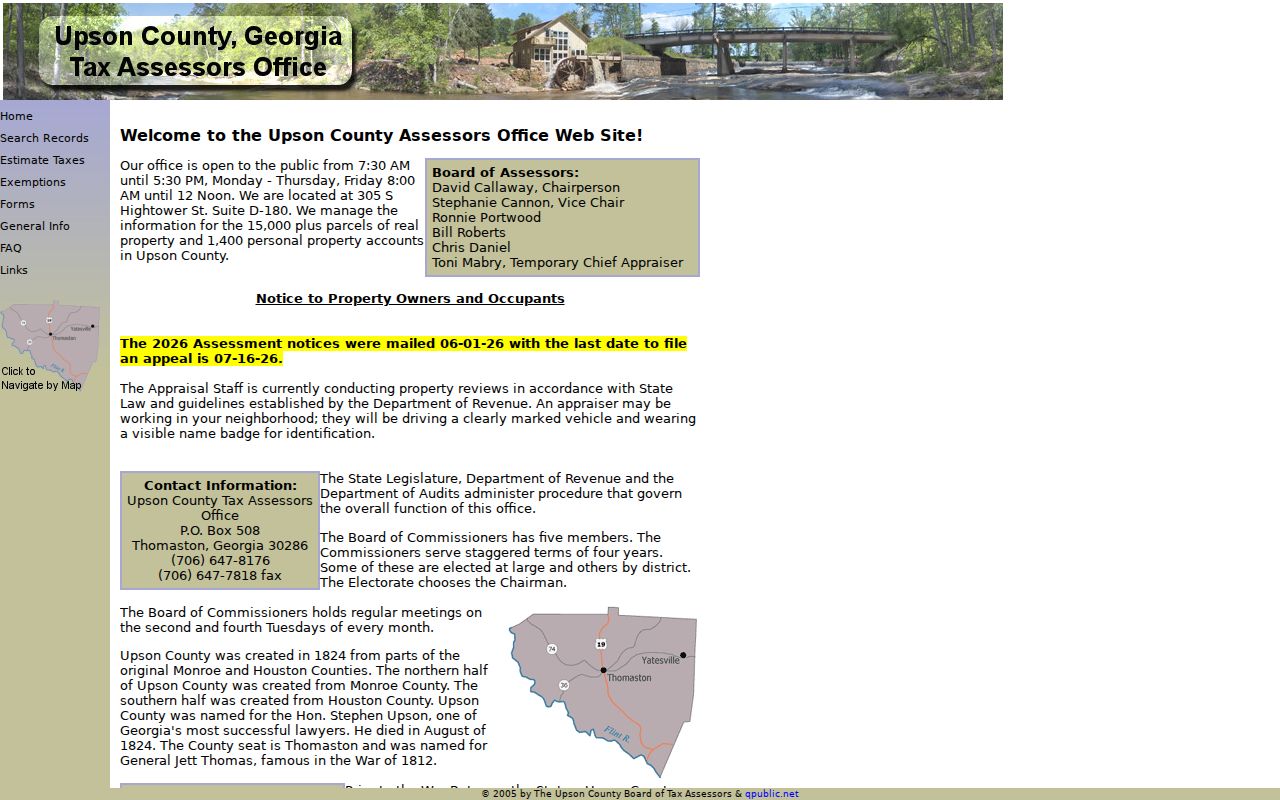
The entry point opens the official assessment route; the live parcel card controls the values and labels it shows today.
Read Upson Tax Values Carefully
An owner name on the assessment roll is useful. It is not conclusive title. A homestead or other exemption flag likewise proves tax treatment, not ownership. When the name differs from a recent transaction, check the newest instrument at the Upson Clerk of Superior Court, and ask the assessor which tax-roll date controls the displayed card.
- Assessed value
- The value figure used within the property-tax system.
- Market value
- The assessor's estimate of fair value when shown.
- Homestead exemption
- Qualified relief tied to the applicable home and applicant.
- Tax lien
- A recorded claim related to unpaid tax.
For a fuller explanation of value layers, see Upson County property values. The property tax records page stays focused on assessment, billing, collection, and appeal.
Upson Exemptions and Annual Notices
Georgia's annual notice of assessment opens the formal review period. Read the notice date, value, property description, and appeal instructions carefully. Keep the envelope or electronic delivery record. An exemption flag should be checked each year rather than assumed from a prior bill.
Homestead and other exemption fields appear on the live Upson card. The local eligibility list and filing calendar come from the office itself. Contact the Upson Tax Assessor for the form, proof, deadline, and status that apply to the specific exemption. Do not rely on an old parcel card or a general state summary.
Note: A tax exemption can change the taxable result. It does not change the recorded owner or the property's market sale price.
Look Up a Upson Tax Bill
The county Quick Links page offers a "Search Tax Records" route to the current bill. Begin at the verified Upson County quick-links page. If the destination fails, give the Tax Commissioner the parcel number, property address, owner name, and tax year by phone, mail, or at the counter. The office can confirm the balance and payment status directly.
- Find the parcel in QPublic and save its exact map or parcel number.
- Open the county tax-record link and search the current year plus any year at issue.
- Compare the billed owner, balance, payment status, and exemptions with the assessment card.
- Ask the Tax Commissioner about any delinquency, partial payment, lien, or tax-sale status.
- Tax year
- The annual period controlled by the bill.
- Levy
- The tax charge applied under governing rates and rules.
- Payment status
- Whether the account reflects payment, a balance, or delinquency.
- Partial payment
- An arranged payment toward a bill rather than automatic satisfaction.
The county FAQ says partial payments may be accepted for legitimate hardship when arranged before the due date. That is not an automatic installment right. Contact the Tax Commissioner ahead of the due date and get the current terms in writing.
The county quick-links page appears below.
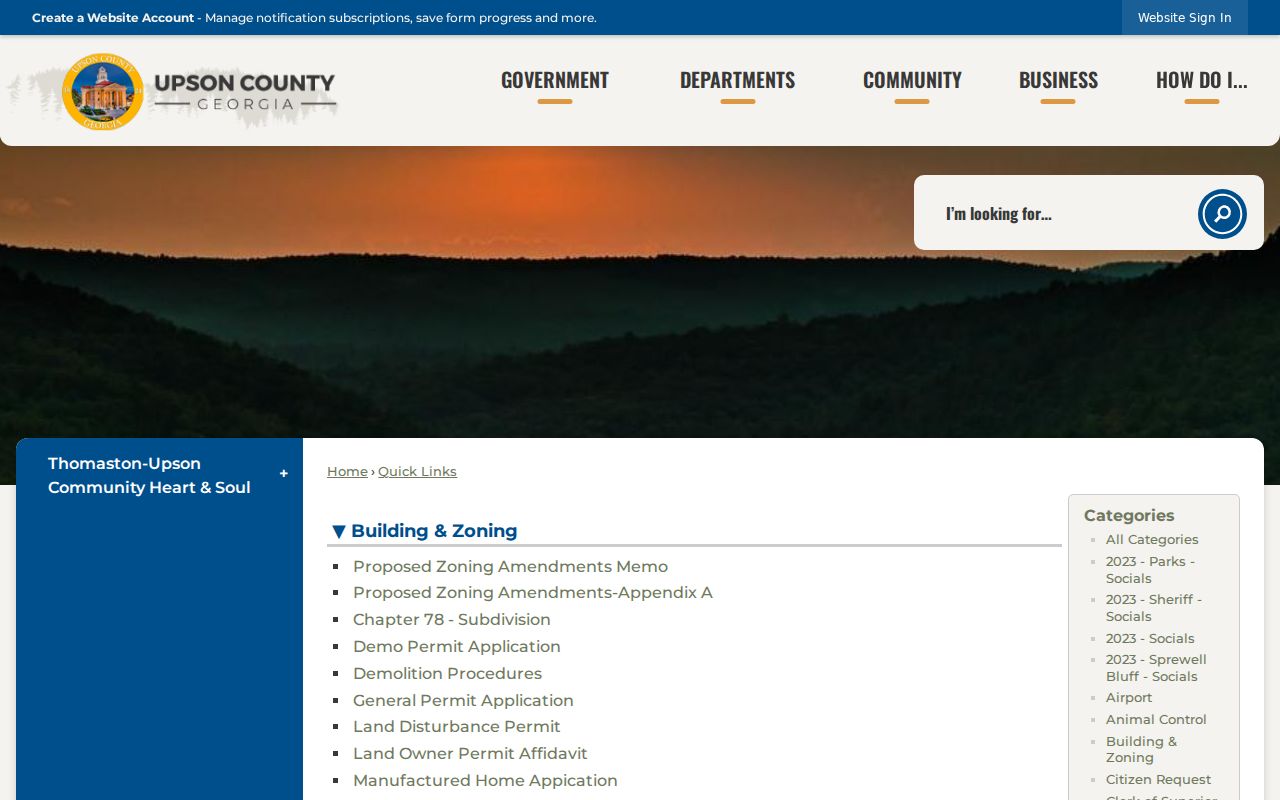
The county page is the verified handoff when a deep tax-bill address changes.
Delinquent Upson Taxes and Liens
A past-due bill is not a recorded tax lien. A recorded lien is not a completed tax sale. These are three different events. Ask the Tax Commissioner for the bill and collection status. Then search the Clerk's real-estate index for recorded tax liens, releases, deeds, and court-linked instruments. A civil docket or newspaper advertisement alone does not prove that title changed.
Upson's fee schedule lists tax-lien recording charges starting at $5 plus page and reference charges. That amount is only a recording fee. It is not the debt balance or a copy price. Verify any release against the correct parcel, taxpayer, reference, and recording date.
Court Records Behind Upson Tax Disputes
Upson Superior Court can hold tax appeals and related property litigation. Search each known owner and entity in the Upson civil and criminal portal. Then read the docket for the case number, parties, filing date, events, orders, and disposition. A docket is an index of case activity. It is not a substitute for the signed order or recorded deed.
Georgia Courts eAccess also lists Upson Superior Court. Counter access may reach files that are not exposed online. Ask about archived cases, public terminals, certification, and current copy costs.
Request Offline Upson Tax Records
A written Georgia Open Records Act request should name the Tax Assessor or Tax Commissioner, the parcel, tax year, exact existing record, preferred format, and whether certification is needed. The agency generally responds within three business days or explains timing, estimated cost, and any exemption. Electronic records should be supplied electronically where practical.
Ask for an estimate before broad retrieval. The first 15 minutes of qualified search time are free under state guidance, while further labor and copy terms depend on the lawful schedule and custodian. Protected personal or financial details may be redacted.
Appeal a Upson Assessment
Georgia sets a firm clock for appeals. An owner has 45 days from the assessment notice date to file. The appeal can challenge value, taxability, uniformity, or a denied exemption. Taxpayers also choose a route listed on the notice itself. The options include the county Board of Equalization, a hearing officer for qualifying non-homestead parcels, or binding arbitration. Follow the current Upson notice and its filing directions. Those controls govern the parcel-specific deadline.
Strong evidence makes a real difference at hearing. Bring the parcel card, current photographs, and a survey or plat if one exists. Comparable property records, sale documents, and repair facts help show the assessor's numbers are off. Incorrect building data on the tax roll is worth correcting too. Keep proof that the appeal was filed on time. Expect the Board of Equalization to take a while to work through its cases.
Appeal window. File within 45 days of the assessment notice date. Confirm the deadline and delivery method on the current Upson notice.
The Georgia DOR appeal explanation appears in this successful capture.
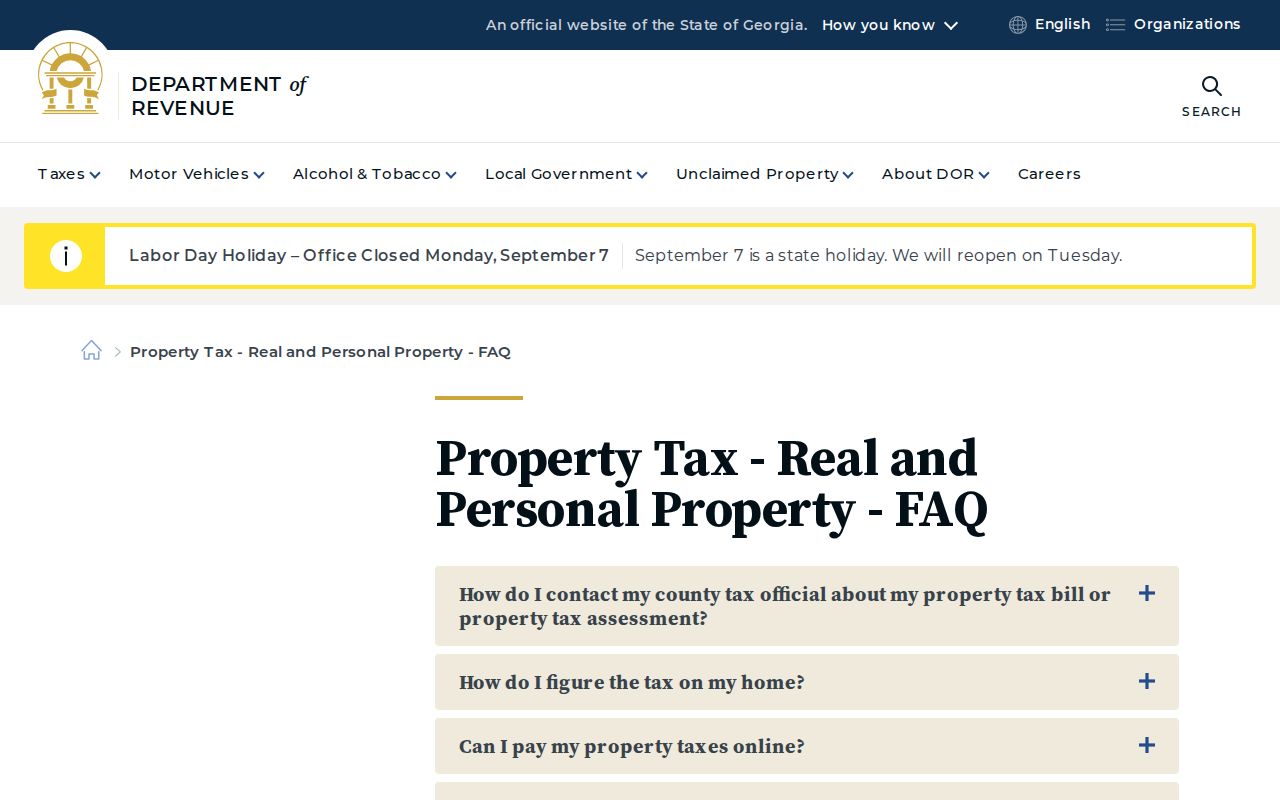
State guidance frames the appeal process. The Upson notice still controls the deadline and where to file.