
Types in Upson Deed Records
Upson County's real-estate recorder is the Clerk of Superior Court. Its index pairs deeds with security instruments, releases, plats, liens, and related filings. Instrument type hints at a document's role, but only the full image and legal description tie it to one tract.
| Deed Type | What It Does | Common Use |
|---|---|---|
| Warranty deed | Conveys an interest with warranties | Ordinary sale transfer |
| Special warranty deed | Uses narrower warranties | Limited-warranty transfer |
| Quitclaim deed | Conveys whatever interest exists | Family or cleanup transfer |
| Executor deed | Conveys through estate authority | Probate-related sale |
| Deed under power | Records an exercised sale power | Foreclosure-related chain |
A security deed backs a debt instead of transferring land outright. Assignments track who now holds that interest. Cancellations, satisfactions, and releases confirm that a filed claim was resolved. Easements, rights-of-way, lis pendens, and plats can all color how a deed reads. Materialman's liens and tax liens can do the same.
Search Upson's Two Index Windows
Coverage splits into two windows in Upson County. Grantor and grantee index books from 1938 through 1989 were imaged and made searchable. Deed-book images are available through GSCCCA. Separately, GSCCCA states that its statewide Real Estate Index holds transactions from every Georgia county. Those transactions date from January 1, 1999 forward. Historical data keeps being added.
A gap could still fall between those windows. Search Upson's Kofile index for the local material. Then use GSCCCA for statewide modes and images. For intervening years, earlier books, and documents that will not open online, ask the clerk directly.
The official Kofile search page displays the results screen for the county index.
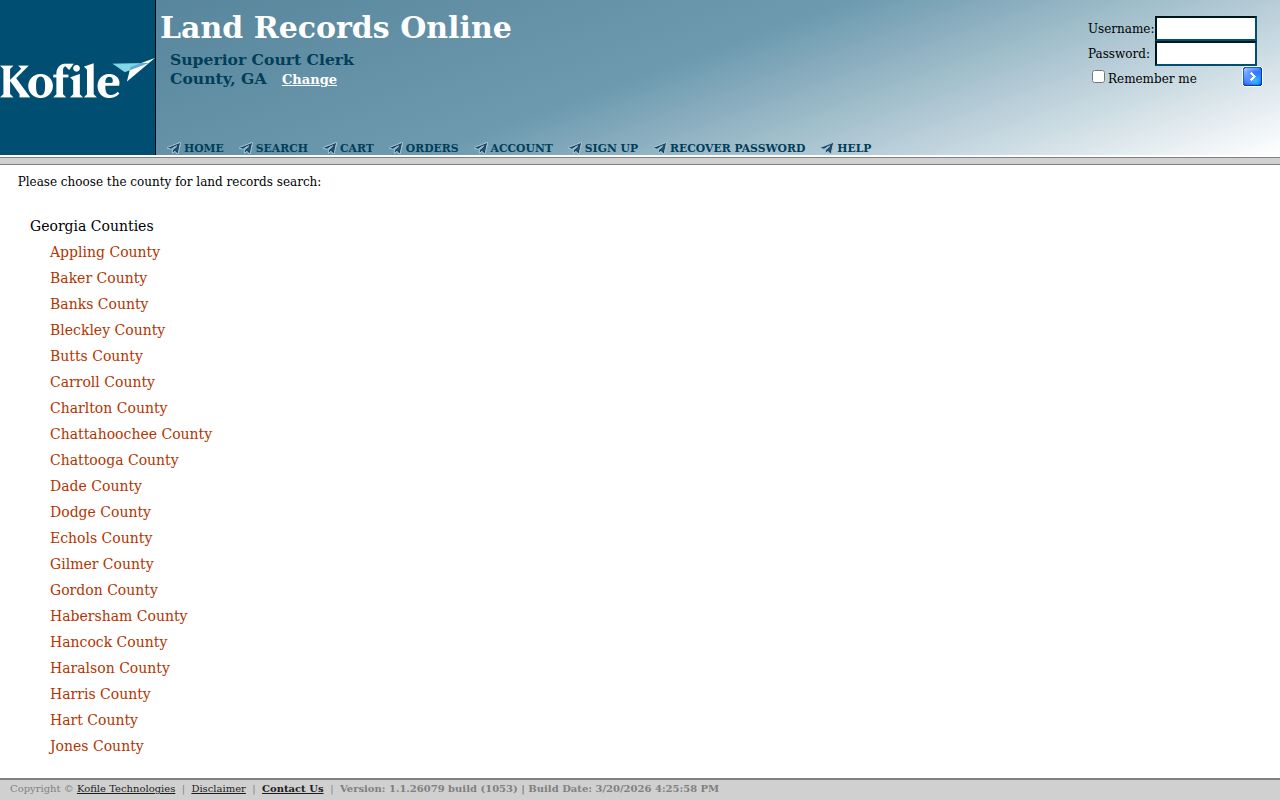
The clerk stays the authority on coverage and copies.
Fields in the Upson Deed Index
Name mode tracks grantors and grantees. Book and page mode opens a known reference. GSCCCA also advertises property searching by subdivision, unit, block, and lot, and instrument filters can isolate deeds, liens, plats, and related filings, though live controls may depend on access.
| Search Field | Meaning | Best Practice |
|---|---|---|
| Party name | Grantor or grantee | Try initials and entity variants |
| Book and page | Instrument locator | Copy the citation exactly |
| Subdivision, block, lot | Property elements | Compare with the plat |
| Instrument type | Deed, lien, or plat class | Search releases and assignments too |
A result may list seller, buyer, location, lien details, and book-page data, yet the index can omit exceptions and the full legal description. The image settles it. The statewide GSCCCA hub displays these fields directly.
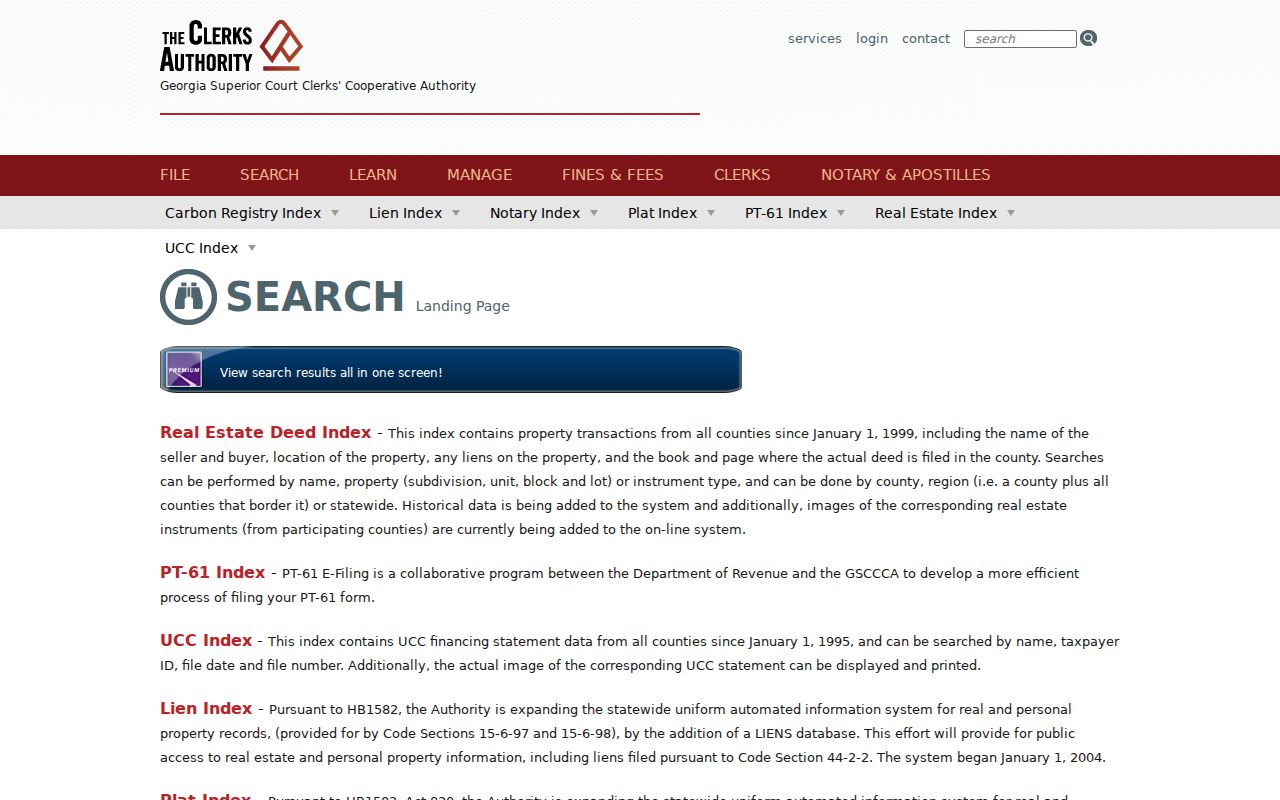
Its modes show why names, citations, and property elements should all be saved.
The statewide program's structure is visible in the captured GSCCCA real-property overview.
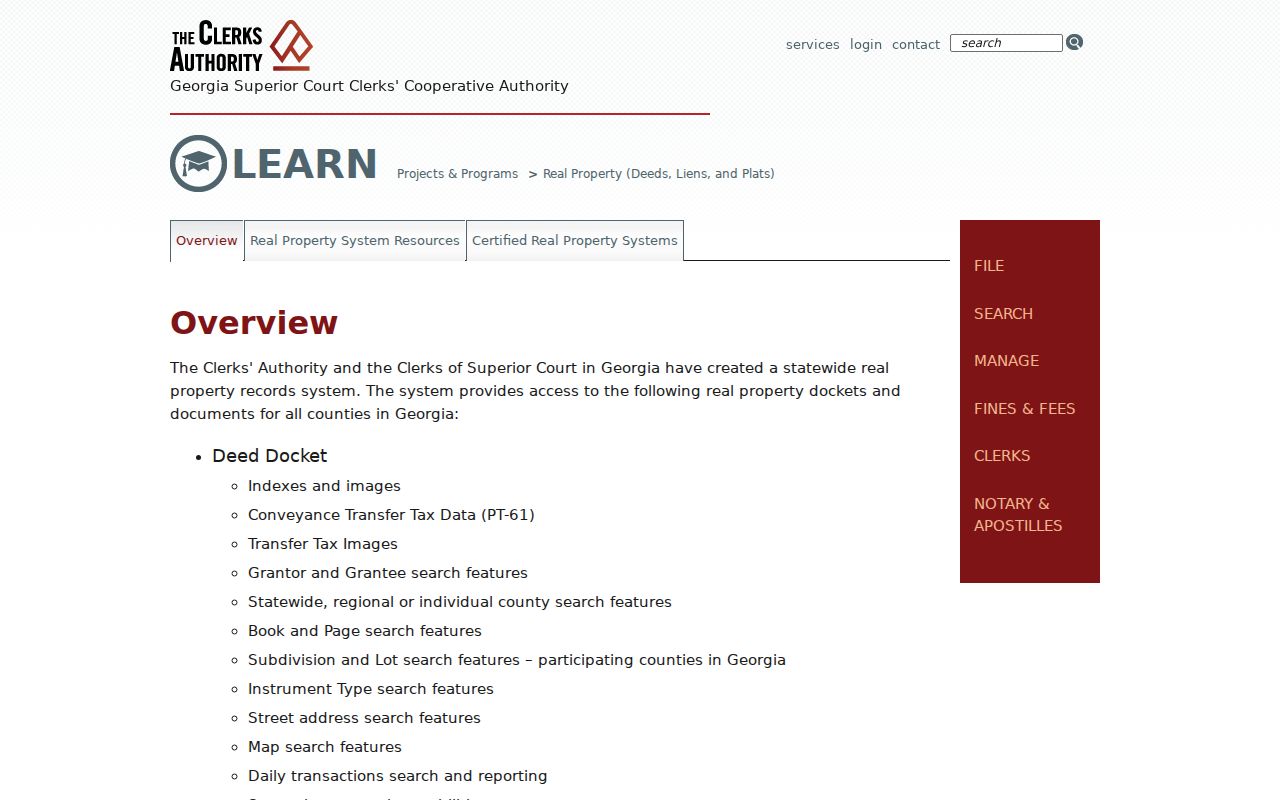
That overview separates the statewide index from Upson's own 1938 through 1989 image window. Two windows, two date ranges.
Walk Upson's Grantor-Grantee Chain
A grantor gives up an interest. A grantee takes it in. The chain of title is the ordered run of those transfers, so begin at the newest confirmed deed and step back one link at a time. Match the tract description, dates, names, and book-page references at every step.
- Find the current party as grantee and open the acquisition deed.
- Record its grantor, date, type, citation, and legal description.
- Search that grantor as an earlier grantee and verify the tract.
- Repeat, using deed books, plats, probate, or tax digests when online access stops.
- Grantor
- The party transferring the stated interest.
- Grantee
- The party receiving the stated interest.
- Chain of title
- The linked sequence of transfers for one tract.
- Book and page
- The location assigned to a recorded document.
Probate can break a clean buyer-seller line. Wills, orders to sell, and executor deeds often explain a shift in ownership. When an owner died or a deed names an estate, search the Upson Probate Court route.
Older Upson Deeds and Microfilm
Pre-1938 research starts at the Clerk's counter. Ask about deed books and the county microfilm inventory. The Thomaston-Upson Archives reports local records reaching back to 1821, including tax digests, court dockets, minute books, newspapers, and government material. Those sources can bridge a missing entry or explain an old road, estate sale, or subdivision origin. Tax digests are support, not transfer documents. Legal notices work the same way. Read the next confirmed deed and work backward from its legal description. Note: The 1938 through 1989 span is a known digital window, not proof that other Upson deed records are missing.
Upson Recording Fees and Filings
The posted schedule lists $25 per deed or real-estate instrument and $25 per cancellation, satisfaction, release, or assignment. Plats, maps, and condominium floor plans run $10. General executions and liens are $25. Each release adds $25. Tax-lien charges start at $5, with page and reference charges on top. A UCC-1 is $25, a UCC-1 with assignment is $50, and a UCC-3 or UCC-5 is $25.
These are recording charges only. Ask the clerk about image, copy, and certification costs before relying on these recording fees; a focused Georgia Open Records Act request can also seek existing non-exempt material when ordinary access falls short.
FANS Watches New Upson Filings
Georgia's Filing Activity Notification System goes by FANS. The Clerk's page links it. A registered user may receive alerts about certain property filings tied to selected names or parcels. An alert is a lead, though. It is neither a freeze nor a fraud finding, so review any alert in the official index, open the instrument, and call the clerk if it looks unfamiliar; name variants can affect matching.
Plats Support Upson Deed Research
A recorded plat can answer questions a name search cannot. It may lay out a subdivision with its lots, blocks, roads, easements, dedications, and adjoining tracts. All are tied to a book-page citation. Per GSCCCA, the statewide Plat Index went live for county submissions on January 1, 2004. Older Upson plats did not vanish at that line. Ask the clerk about plat books and images from earlier years.
Remember that a plat is a recorded depiction, not a fresh boundary survey. Check its title, survey date, recording citation, and lot labels against the deed's legal description. A later filing may split, combine, or reflag a lot. In that case, track down the newer plat. Do not assume the first drawing still controls. Upson's 2024 subdivision memo on flag lots and serial splitting is a local reminder. Parcel shape can shift through later deed records.
Upson Liens Need Later Releases
Any lien hit deserves the same follow-through you would give a deed. Search forward for a cancellation or satisfaction. You might also look for a release or assignment. Each one should cite the original book and page. The Upson schedule treats these as separate recordable instruments. So the first filing alone may not show current status. Match names, parcel details, dates, and references before assuming two hits form one claim.
Different liens do different jobs. Lis pendens, general executions, security deeds, and tax liens each carry their own weight. A lis pendens only signals pending litigation; it proves nothing about the outcome. A lawsuit may touch the deed chain. Then read the court docket and the final order. Also read any later recorded instrument in the property records.
Obtain a Upson Deed Copy
Start with the online image if one exists. For a missing image, contact the Clerk. For a certified copy, you can also go to 1185 Highway 19 South, Thomaston, Georgia 30286. Hours run Monday through Friday, 8 a.m. to 5 p.m. Call 706-647-7835 or mail P.O. Box 469, Thomaston, Georgia 30286.
When you request a deed, supply the parties, document type, date, and book-page reference. Say whether you need a plain or certified copy, and ask the current price. Counter service, public terminals, and mail all work as fallback channels. A focused records request also works for Upson County deed records.
Recorded, not guaranteed. Upson County deed records show filed instruments. They do not rule out unrecorded interests, defects, or later court action.
When the parcel or legal description is unknown, start with the Upson County property search.